Why roofing and carpentry under one roof
The name has carpentry in it and the trucks carry roofing ladders, and people sometimes ask which one I really am. The answer is that around Springfield you cannot do one well without the other. A roof leak that has been ignored for a couple of winters is no longer a roofing problem by the time I get the call. It is a rotted rafter tail, a soft patch of sheathing, a fascia board that has pulled loose, and a soffit with a squirrel living in it.
A roofer who only does shingles will patch the top and leave the rot. A carpenter who does not roof will fix the wood and call someone else to cover it, and the two trades will argue about whose flashing failed. I learned early that the homeowner is the one who loses in that arrangement, so I do both, and I take responsibility for the whole assembly from the rafters to the ridge cap.
How a job actually runs
The first visit is a look, not a sales pitch. I get on the roof if it is safe to walk, and I get in the attic every time, because the underside of the deck tells you more than the top. Dark staining around the nails, frost on the sheathing in winter, daylight at the eaves, and blocked soffit vents all show up from inside and none of them show up from the driveway.
After that you get a written scope. If there is a repair option and a replacement option, both are described separately with what each one covers and what it does not. I do not bundle the two so that the cheaper one looks worse. You pick, and the crew that shows up to do the work is the same crew that scoped it.
During the job we protect the beds and the driveway, strip to the deck, replace any sheathing that has gone soft, and photograph what we found before it is covered again. You get those photos. At the end the lawn gets a magnet sweep for nails and the gutters get cleaned of the grit that tear-off leaves behind.
The houses I work on
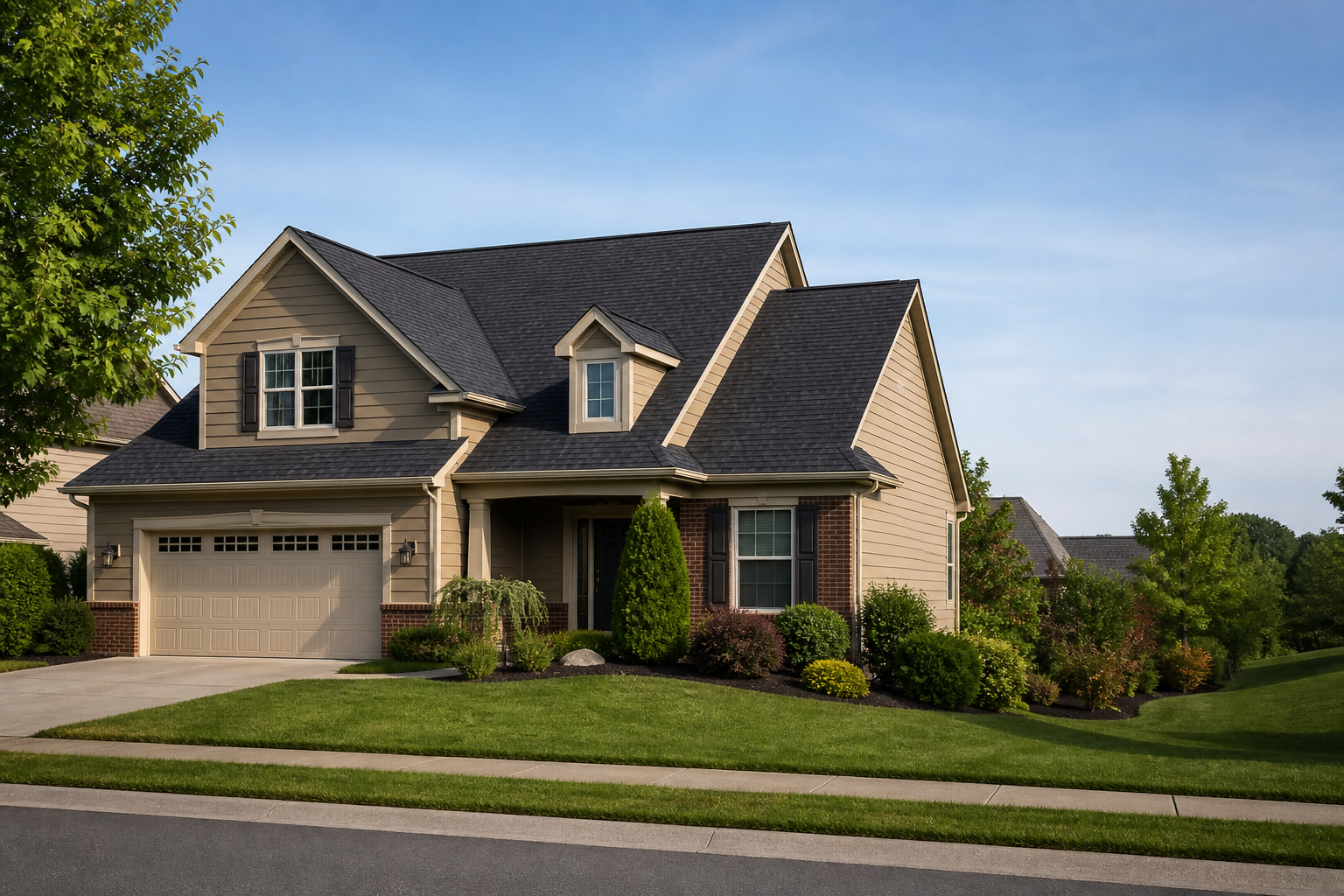
Springfield has a housing stock that most of the country does not. Three-family homes with flat rubber roofs over the porches and steep asphalt on top. Prewar colonials in Forest Park and the McKnight district with wide overhangs, wood gutters, and framing that was sized generously but has been wet too many times. Postwar capes and ranches out in Sixteen Acres and East Forest Park with shallow attics that ice up every winter. Newer colonials in Wilbraham and East Longmeadow with architectural shingles and long, exposed eaves.
Each of those needs a different answer. The triple-decker needs rubber done properly at the parapet and the drip edge. The old colonial needs the wood gutter decision made honestly. The cape needs ventilation and ice barrier more than it needs new shingles. Knowing which is which is most of the job.
What I will not do
I will not shingle over a second layer on an old house. I will not tell you a roof needs replacement when a repair will hold for years. I will not cover sheathing I have not looked at, and I will not leave a porch roof with rolled asphalt when the homeowner is going to be calling me back in three springs.
That list costs me some jobs. It also means the jobs I do take are the ones I can stand behind when the next nor'easter comes through.
Where I work
Springfield is home base. Chicopee, West Springfield, Agawam, Longmeadow, East Longmeadow, Ludlow, and Wilbraham are all close enough that I am there most weeks. Beyond that, along the river toward Holyoke and Westfield, I take jobs when the schedule allows.