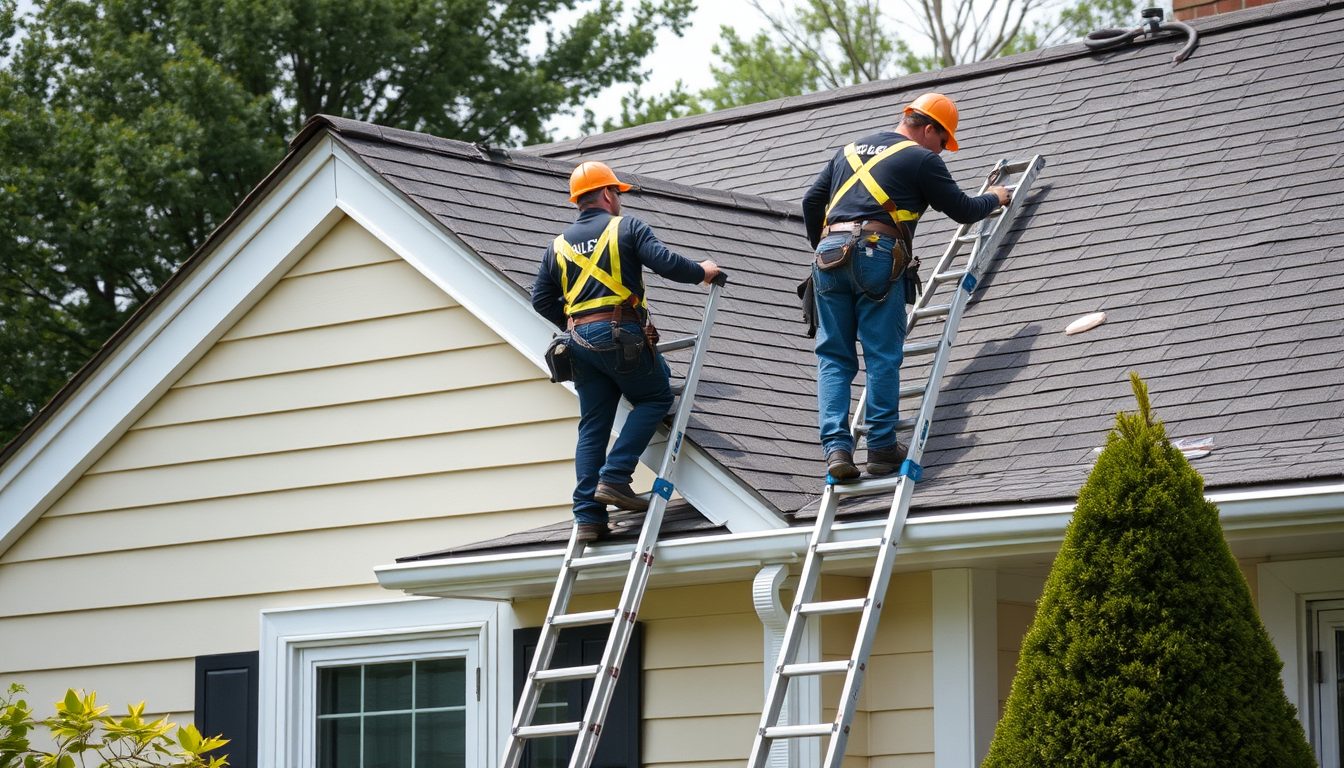
Why does my ceiling only leak in late winter?
Almost every February leak in Hampden County is an ice dam, not a hole in the roof. Snow melts over the warm part of the attic, runs down to the cold eave, freezes into a ridge, and the water behind that ridge backs up under the shingles. The fix is rarely new shingles. It is usually more insulation at the attic floor, air sealing around the can lights and the attic hatch, and a proper ice and water membrane at the eaves when the roof is next opened up.
If you want a short-term answer during a bad week, I can steam the dam off. I do not chip ice with a hammer and I would ask you not to let anyone else do it either, because that is how shingles get cracked in January and start leaking in April.
Can I put new shingles over the old layer?
Massachusetts code allows a second layer in some cases, but I only recommend it when the deck is sound, there is exactly one layer already, and the roof is a simple gable without valleys. On a Springfield colonial with two or three valleys and a hundred-year-old plank deck, a tear-off is the honest answer, because the second layer hides the rot I most need to see.
Tearing off also lets me replace the drip edge, add the ice membrane, and fix the fascia in the same visit, which is where carpentry and roofing overlap and why I do both.
What is the rubber on my porch roof, and why does it keep failing?
Most low-slope porch and addition roofs around here are EPDM, a black rubber membrane. It fails at the seams and at the edge terminations, not in the field. If a previous repair was a smear of roof cement, the cement will crack in one winter and you are back where you started.
The real repair is a new seam with primer and cover tape, or a fresh membrane if the old one has shrunk and pulled away from the walls. I also check where the porch roof meets the house wall, because the flashing there is the most common source of the leak you thought was the rubber.
Do you take on the inside damage as well as the roof?
Yes, and it is the main reason people call a carpenter for a roofing problem. A leak that has gone on for a season usually means soft sheathing, a stained ceiling, sometimes a rotted top plate or a window header behind the siding. I would rather open that up myself than hand you off to a second contractor who has to guess at what I saw.
On a typical job that means the roof goes on first, then the fascia and soffit, then the siding and trim, then the interior drywall and paint if you want me to take it that far.
How do you price a job?
Every estimate is written and split into the repair option and the replacement option where both are realistic, so you can compare them on the same page. I walk the roof and the attic before writing anything. I do not quote from the driveway and I do not quote from a satellite photo.
The scope lists the materials, the flashing details, the disposal, and the carpentry items separately. If we find more rot once the shingles are off, I photograph it, price it as its own line, and ask before I proceed.
What towns do you cover?
Springfield first, then the ring of towns I can reach in twenty minutes: Chicopee, West Springfield, Agawam, Longmeadow, East Longmeadow, Ludlow and Wilbraham. I will go further for a full replacement or a larger carpentry project, but for a single repair visit I try to stay inside that circle so I can get back quickly if something needs a second look.